
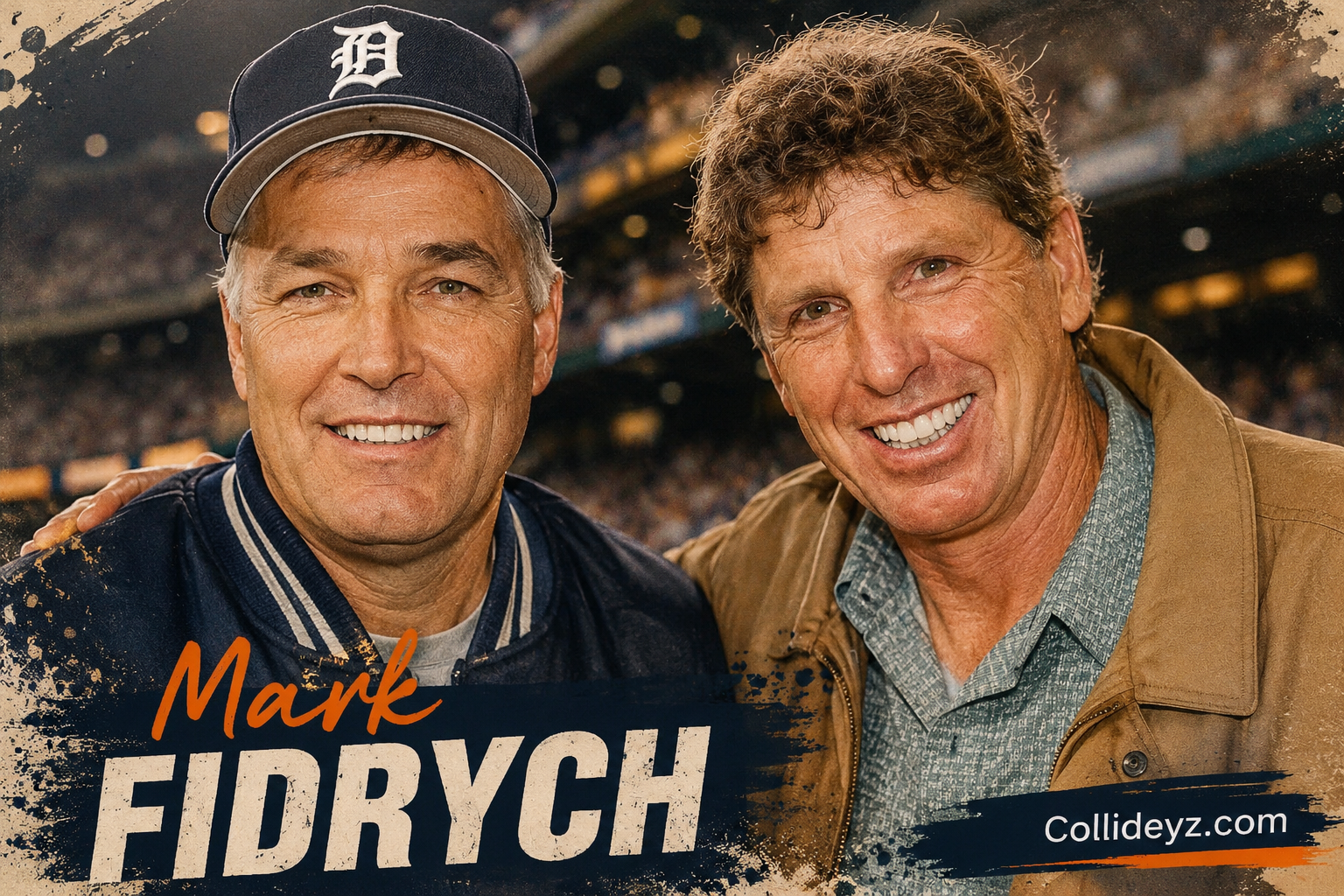

Few players in professional baseball history captured the hearts of sports fans quite like Mark “The Bird” Mark Fidrych. In the summer of 1976, this eccentric rookie pitcher for the Detroit Tigers became a genuine cultural phenomenon across the nation.
He earned his famous nickname because his curly blonde hair and tall, lean frame reminded his coach of the beloved Sesame Street character Big Bird. Fidrych did not just win baseball games; he charmed millions by talking directly to the ball, meticulously grooming the pitcher’s mound, and high-fiving infielders after spectacular plays.
While his meteoric rise to fame changed baseball culture forever, many modern sports fans wonder how his immense popularity translated financially. Given how today’s professional athletes sign multi-million dollar deals, what was Mark Fidrych’s net worth?
At the time of his tragic passing in April 2009, financial analysts estimated his net worth to be between $1 million and $2 million. To understand how he accumulated his wealth, it is essential to look at the vastly different economic landscape of baseball in the 1970s. Fidrych’s athletic career was incredibly brief, but his long-term financial security came from a mix of modest sports earnings and a successful second act as a local small business owner.
The 1976 Phenomenon and the Rookie Minimum
When Mark Fidrych made his major league debut in 1976, baseball salaries were a tiny fraction of what they are today. During his spectacular rookie season, Mark Fidrych earned the league minimum salary of just $16,500. This was the base rate required by the league for any first-year player, regardless of how many tickets they sold or how famous they became.
And boy, did Mark Fidrych sell tickets for the Detroit Tigers. When “The Bird” was scheduled to pitch, stadiums packed in historic crowds that routinely doubled the average attendance numbers.
Sports economists later calculated that his presence generated more than $1 million in extra ticket revenue for the league during that single season. His home games accounted for nearly half of the entire season’s attendance for the Tigers, making him an incredibly valuable asset to team ownership.
Despite bringing immense wealth to stadium owners and opposing teams, Mark Fidrych lived a remarkably modest lifestyle. He drove a subcompact economy car, rented a small apartment, and famously wondered aloud if his salary could cover the postage required to reply to his mountain of fan mail. This refreshing humility only made him more endearing to working-class sports fans who saw him as a peer.
Contract Extensions and Career Earnings
Recognizing his massive financial impact and on-field success, Detroit Tigers management eventually rewarded the young star. At the conclusion of his historic 1976 season, the team gave Mark Fidrych a $25,000 performance bonus and signed him to a lucrative three-year contract extension worth a total of $255,000.
This meant he earned an average of $85,000 per year through 1979, which provided him with genuine financial comfort for the first time in his life. Mark Fidrych also capitalized on his sudden fame with select commercial endorsements.
He appeared in a popular television advertisement for Aqua Velva aftershave and was featured on the cover of prestigious national publications like Rolling Stone magazine. He was even considered for a prominent movie role in the classic musical film Grease, a part that ultimately went to actor Lorenzo Lamas.
Unfortunately, severe physical setbacks quickly altered his career trajectory and long-term earning potential. He suffered a serious knee injury during spring training in 1977 and later experienced a torn rotator cuff, which is a severe injury to the muscles and tendons stabilizing the shoulder joint. Because advanced sports medicine was still in its infancy, his injury went completely undiagnosed for years, cutting his major league career short by 1980.
Mark Fidrych’s Financial Milestones
To map out his financial journey clearly, we can look at the core numbers that defined his athletic career and life. The table below outlines his key earnings, contract details, and major post-baseball assets.
| Financial Category | Estimated Dollar Amount | Key Context and Details |
| 1976 Rookie Salary | $16,500 | The baseline league minimum for his iconic breakout season. |
| 1976 Performance Bonus | $25,000 | Awarded by team management after winning Rookie of the Year. |
| Three-Year Contract | $255,000 | Total value of his deal spanning from 1977 through 1979. |
| Total MLB Career Pay | $400,000 | Estimated cumulative compensation across five active seasons. |
| Primary Post-MLB Asset | Variable | A 123-acre working farm purchased in Massachusetts. |
| Net Worth at Death | $1,000,000 to $2,000,000 | Estimated valuation of his estate and businesses in 2009. |
Life After Baseball: The 123-Acre Farm
Many professional athletes struggle to adjust when the bright spotlight fades, but Mark Fidrych transitioned seamlessly back to a quiet, productive life. He returned to his hometown of Northborough, Massachusetts, and smartly used his baseball earnings to purchase a beautiful 123-acre working farm.
Instead of dwelling on what could have been or feeling bitter about his injuries, he embraced physical labor and became a local entrepreneur. He launched his own independent commercial trucking business, purchasing a heavy-duty ten-wheel commercial truck to haul gravel, asphalt, and dirt for regional construction projects.
Fidrych was a hands-on business owner who regularly maintained his own equipment and drove his truck every single day. This business, combined with the natural real estate appreciation of his substantial farm acreage, allowed his personal net worth to grow steadily over the decades following his retirement from sports. He proved that financial stability can be found outside of a stadium environment.
Estimated Net Worth at Death and Enduring Legacy
When Mark Fidrych died in a tragic accident on his farm in April 2009 at the age of 54, he left behind a highly respectable estate for his family. Financial publications and estate valuations pinned his final net worth around $1 million to $2 million.
His wealth was not built on high-risk corporate investments or modern sports broadcasting contracts. Instead, it was secured through real property ownership, a steady local service business, and the timeless appeal of his autograph on the collector market, where fans still pay premium prices for his signature.
Fidrych proved that an athlete’s financial legacy does not require a decade of maximum contracts. By living within his means and investing in tangible assets like land and industrial equipment, he preserved his baseball earnings and built a comfortable, self-sustaining lifestyle. He remained a beloved figure in his community until his final day.
Conclusion
Mark Fidrych’s financial story is as unique as his legendary pitching style. In an era before massive television contracts and player free agency exploded athlete salaries, he earned a modest sum playing the game he loved.
Rather than letting a premature retirement ruin him financially or emotionally, he built a stable, prosperous life through hard work and smart local investments. Ultimately, his net worth reflects a successful life well-lived on his own terms, showing that true wealth comes from contentment and community respect.
View More Content Here: Don Prudhomme

